
What Another Season of Neglect Actually Costs
Skip maintenance on a commercial or warehouse overhead door for one more season and you're not just risking a squeaky hinge. You're risking a door that won't open on a Monday morning with a loading dock full of trucks, a panel that buckles under storm-force wind because the hardware was never rated for it, or a spring failure on a door heavy enough to hurt someone. Residential doors fail inconveniently. Commercial doors fail expensively, and sometimes dangerously. If you and your spouse are debating whether the shop door behind the house or the detached warehouse unit needs real attention this fall, here's the argument settled.
They Are Not the Same Product
A standard residential garage door is built for a handful of cycles a day and a specific wind-load range tied to a single-family home. Commercial and warehouse doors are a different category of equipment entirely:
- Cycle count: Residential doors are engineered for a few openings daily. Commercial doors on a working property can cycle dozens of times a day, which means springs, rollers, and openers wear out faster and need heavier-duty components from the start.
- Construction and gauge: Commercial doors typically use thicker steel, reinforced panels, and industrial-grade tracks because they're often larger and carry more weight, especially insulated models.
- Wind-load rating: Given hurricane season in this part of Florida, wind-load engineering matters on any overhead door, but commercial and warehouse doors covering larger openings need bracing and anchoring sized correctly for that opening — not a scaled-up version of a residential kit.
- Opener systems: Residential openers are chain or belt drives sized for a few hundred pounds. Commercial doors often run on heavier-duty jackshaft or trolley operators built for continuous use and higher door weight.
Put simply: a bigger door isn't just a scaled-up version of the one on your house. It's a different piece of equipment with different failure points.
What Maintenance Actually Looks Like
Commercial and warehouse doors need more frequent attention than residential ones, not less, because they're used harder and often exposed to more punishing conditions — direct sun, salt-laden air if the property is anywhere near the coast, and moisture swings from humidity and afternoon downpours. A practical maintenance rhythm looks like this:
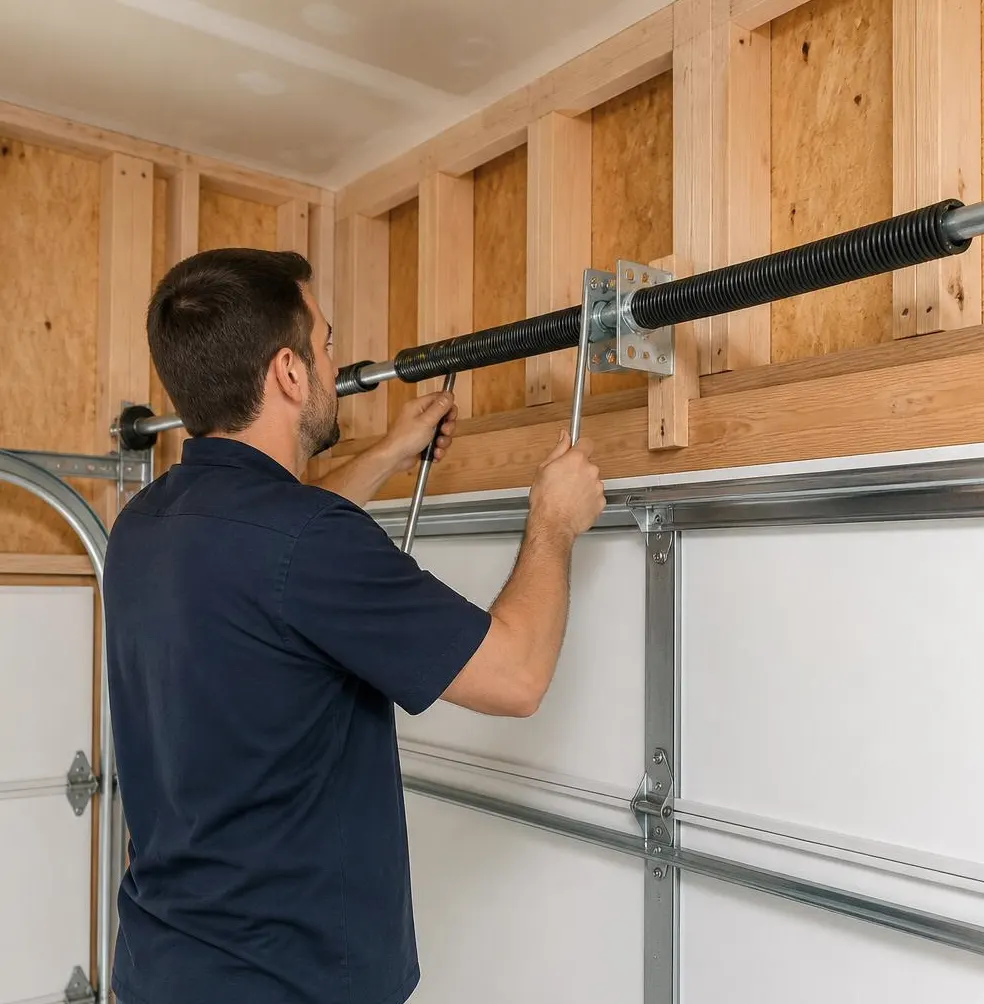
- Spring and cable inspection: Heavier doors put more stress on torsion springs and cables. On high-cycle doors, these components should be checked more often than once a year, not left until something snaps.
- Track and roller alignment: Swelling from moisture and repeated heavy use can knock tracks out of alignment faster on commercial doors, leading to off-track issues that are more disruptive when they stop a business operation rather than a car.
- Hardware and fastener checks: Salt air and humidity accelerate corrosion on bolts, hinges, and brackets. Loose or rusted hardware on a commercial-size door is a bigger structural risk simply because of the weight involved.
- Weatherstripping and seals: On a warehouse door, gaps let in humidity that can damage inventory or equipment inside, not just make a garage feel muggy.
- Opener and safety sensor testing: Heavier-use openers need their safety reversal sensors and limit settings checked more frequently, since a malfunction on a large commercial door carries more force than on a residential one.
None of this is a one-and-done job. A door that cycles dozens of times a day and sits exposed to Gulf Coast humidity and storm season wind needs a maintenance schedule built around how it's actually used, not a generic yearly tune-up copied from a homeowner's checklist.
When to Call Freeport Overhead Door Co
If a commercial or warehouse door on your property is sticking, cycling slower than it used to, showing rust at the hinges, or hasn't had its springs and cables inspected in a while, that's the time to call before hurricane season or heavy daily use turns a maintenance item into a shutdown. Freeport Overhead Door Co handles Preventive Maintenance & Tune-Ups built around how hard a door is actually worked, along with Garage Door Spring Repair for the heavier-duty springs commercial doors rely on. We'll check wind-load hardware, alignment, and cycle wear so the door keeps working as hard as the property does.
If you're in Freeport, FL or anywhere in Walton County and want a commercial or warehouse door looked at before storm season puts it to the test, give Freeport Overhead Door Co a call — same-day service, honest pricing, no guesswork.